Scrub & Throw
Both materials the brand sells are plant fiber, and the brand designs plastic out of the packaging as well as the product - cardboard boxes with no poly bag or shrink wrap, which is unusual in a category where even the natural sponges usually arrive in a plastic sleeve.
The loofah line is the brand's strongest claim, because it is the rare case where a plastic-free claim has been checked by someone other than the brand: it is listed in the USDA BioPreferred registry at a certified 98% biobased content, from independent ASTM D6866 lab testing. The cellulose line rests on the brand's own description.
How clear are their specs?
Product pages are unusually explicit about what is NOT in the sponges - no polyurethane or polyester foam, no glued-on synthetic scrub pad, no antimicrobial coating, no dyes or fragrance - and the loofah's biobased content is independently verified and publicly listed. What they don't publish is where the loofah is grown or the sponges are made, or whether the cellulose sponge contains the reinforcing fiber that cellulose sponges conventionally use. The "USDA Certified" badge also appears on the cellulose listing, where the certification the page actually describes is for the packaging - only the loofah sponge is in the federal registry.
Products we list
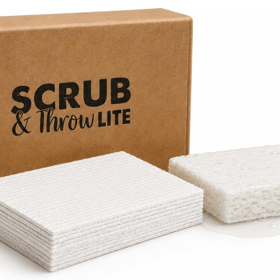
Natural Cellulose Scrub Sponge
The soft, absorbent half of the pair - plain wood-pulp cellulose with no foam and no glued-on scrub pad, flat-packed fifteen to a cardboard box.
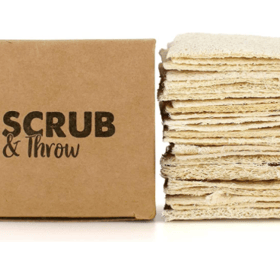
Natural Loofah Scrub Sponge
A bare dried loofah pad, sold thirty to a cardboard box at about 67 cents each - and the only sponge here whose plant content has been verified by an independent lab rather than the brand.