Best Plastic-Free Manual Coffee Brewers
Last reviewed September 2026
The non-electric, hand-driven ways to make coffee - pour-over, French press, AeroPress, moka pot, and percolator. We group them on one page because they share the same plastic-free story: the brewer itself is usually glass, ceramic, or steel, and plastic (when there's any) hides in a small handful of places - the filter, the lid, the plunger, or the handle. Each method has its own section below with our picks and what to check.
The short answer
Pick the brewing method first, because it decides both how plastic-free you can get and what else you need to own. Pour-over is the easiest win: the Chemex is a single piece of glass and the Hario V60 a single piece of porcelain, so the brew path is glass or ceramic and paper, with nothing else touching the coffee. Both cost you a paper filter every cup and a slower, more attentive brew.
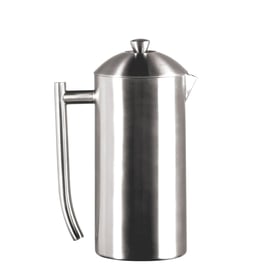
A french press gives you a heavier, oilier cup and no paper, and the all-metal Frieling gets there with a stainless body, lid, plunger and filter. What it costs you is sediment in the cup and a fiddlier clean-up. That is the real pour-over versus french press trade: clarity and control against body and convenience.
One thing the comparisons usually leave out: pour-over, french press and the AeroPress are all just vessels, so they need hot water from somewhere, and a kettle that boils water inside a plastic reservoir puts plastic back into a brew path you just spent money keeping clean. Budget for a kettle with no plastic in the water path alongside any of them. A moka pot or a stovetop percolator sidesteps this entirely, because it heats its own water in the same steel body it brews in.
One to skip: the original AeroPress sits hot water in a polypropylene chamber for the whole brew. The glass Premium and all-steel versions fix that, with silicone seals as the only remaining compromise.
Why plastic matters in manual brewers
Manual brewing is the plastic-free default for a reason: without a pump, tank, or heated tubing, there's simply far less plastic for near-boiling water to touch. A glass Chemex, a steel French press, or a stovetop moka pot moves the entire hot-water path onto glass, ceramic, or metal - the opposite of a drip machine's plastic reservoir and lines. What's left to watch for is small and consistent across every method, which is why it's worth learning once.
What to look for in manual brewers
- The brewer body is the easy part - glass, ceramic, or steel. The plastic, if any, is in the filter, lid, plunger cross-plate, or handle
- Paper filters can shed microplastics of their own; a reusable stainless mesh or a filterless glass brewer avoids them entirely
- Immersion methods (French press, AeroPress) leave grounds and oils sitting in the vessel - all the more reason it's glass or steel, not plastic
- Unfiltered methods (French press, metal-filter brewers) let more diterpenes through, which can nudge LDL cholesterol - a paper filter or moderation addresses it; it's a health note, not a plastic one
- A silicone gasket or seal is common even on all-metal brewers - fine for most people, and usually the only non-glass/metal part left
Plastic-Free Pour-Over Coffee Makers
Manual drippers and glass brewers - Chemex, V60-style cones, and pour-over carafes. Hot water, your hand, gravity, and a filter.
The short answer
This is one of the easiest categories to get completely right - most of the picks are fully plastic-free, so choose on brewing style. The Chemex is the classic all-glass answer, glass and paper only, tied to its own proprietary filters. The ceramic Hario V60 does the same job for much less, and is the one to buy instead of Hario's ubiquitous plastic V60. If you want to drop paper filters and their microplastic shedding entirely, the Pure Over brews through a built-in glass filter, though paperless filtration lets more fines and oils through. The Yeti Rambler dripper is the durable pick if you'd rather not own another breakable glass cone.
What to look for in pour-over coffee makers
- Buy the ceramic, glass, or steel version of a dripper - never the clear plastic one
- Glass and ceramic are inert with boiling water; a stainless cone also lets you skip paper filters
- Paper filters can shed microplastics into the cup - a reusable stainless basket (or a paperless glass brewer) is the fully-plastic-free option
- Check the filters - unbleached, PFAS-free paper, or a reusable metal filter
- A one-piece brewer-and-carafe (Chemex) means fewer parts and nothing to seal
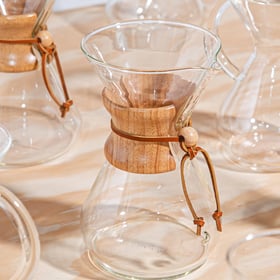
Classic Series Pour-Over
The iconic all-glass pour-over - zero plastic, zero silicone, brew path is glass and paper only.
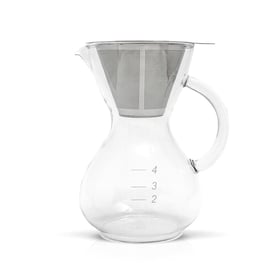
Glass Drip Pot with Glass Handle
Hand-blown borosilicate glass pour-over pot with a glass handle and an all-stainless cone filter - a fully plastic-free, filterless-optional brewer.
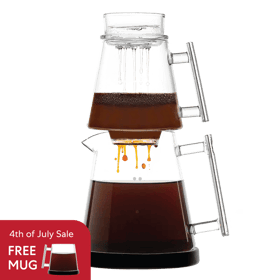
Signature Brew Kit
An all-glass pour-over with a built-in glass filter - no paper, no plastic, no silicone. Fully plastic-free, and it skips the microplastic-shedding paper filter entirely.
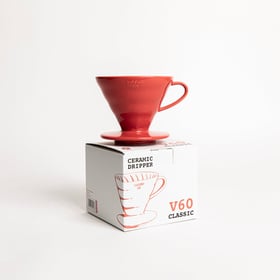
V60 Ceramic Dripper 02
One-piece Arita porcelain pour-over cone - the brew path is ceramic and paper only, with no plastic (unlike Hario's popular plastic V60).

Rambler Pour Over
A one-piece 18/8 stainless V60-style dripper with a bare-steel ribbed brew cone - no plastic in the build or the water path, just steel and a paper filter.
| Product | Rating | Touches your food | Price | Made in |
|---|---|---|---|---|
 Chemex Classic Series Pour-Over Best Overall Chemex Classic Series Pour-Over Best Overall | Borosilicate Glass ·Paper | $$ | USA | |
 Yama Glass Glass Drip Pot with Glass Handle Best Glass Brewer Yama Glass Glass Drip Pot with Glass Handle Best Glass Brewer | Borosilicate Glass ·Stainless Steel ·Paper | $$ | Taiwan | |
 Pure Over Signature Brew Kit Best All-Glass (Paperless) Pure Over Signature Brew Kit Best All-Glass (Paperless) | Borosilicate Glass | $$$ | China | |
 Hario V60 Ceramic Dripper 02 Best Budget Hario V60 Ceramic Dripper 02 Best Budget | Ceramic / Stoneware / Porcelain ·Paper | $$ | Japan | |
| Stainless Steel ·Paper | $$ | China |

Pour-over coffee makers to avoid
Hario V60 Plastic Dripper (clear)
Hario's best-selling V60 is clear plastic and pours near-boiling water straight through it every brew. The ceramic and glass V60s are the plastic-free versions of the same design - buy those instead.
Plastic-Free French Presses
Immersion brewers with a mesh plunger - full-bodied coffee, no paper filter.
What to look for in French presses
- Inspect the plunger stack - the disc and frame holding the mesh are often plastic
- The plunger seal is usually a silicone or rubber ring - a spring-tensioned steel coil (Frieling) is the fully-metal alternative
- Glass or stainless beaker, not SAN/acrylic plastic on budget models
- All-stainless presses double as insulated and are near-unbreakable
- Some "filter basket" presses (Espro) add a plastic filter cage in the brew path
- Unrelated to plastic - a metal mesh lets coffee-oil diterpenes through, which raise LDL; a paper filter removes most of them if that matters to you
| Product | Rating | Touches your food | Price | Made in |
|---|---|---|---|---|
 Frieling Double-Wall Stainless Steel French Press Best Overall Frieling Double-Wall Stainless Steel French Press Best Overall | Stainless Steel | $$$ | China |
French presses to avoid
Espro P7 Double-Filter French Press
Great cup, but the double filter baskets sit in a polypropylene cage that stays in the coffee - plastic in the brew path.
Bodum Chambord / Brazil / Bistro
The glass beaker is fine, but Bodum presses hide plastic in the parts that matter - the lid and the plunger cross-plate that holds the mesh are typically plastic, and the budget Bistro swaps the glass beaker for SAN plastic entirely, all in the brew path.
Plastic-Free AeroPress
Immersion steep plus a quick manual press through a filter - not quite espresso, not quite French press. The long-running question is the plastic, and there are now genuinely plastic-free versions.
The short answer
The standard AeroPress is polypropylene, and both upgrades here move the entire brew path off plastic for real money. The Premium is the one to get for home: a double-wall borosilicate chamber and stainless filter cap, leaving only a silicone plunger seal. The Steel is the travel answer - all 304 stainless, double-wall vacuum-insulated, near-indestructible where the glass chamber is breakable - and it's the most expensive AeroPress by a wide margin. Both still rely on consumable paper filters unless you add a metal one, and both are silicone-only rather than fully plastic-free because of the plunger seal.
What to look for in AeroPress
- The Original's brew chamber and plunger are polypropylene - plastic in the hot-water path by design
- The Premium (double-wall borosilicate glass + stainless cap) and Steel (all-304-stainless) move the water path off plastic, leaving only a silicone plunger seal
- Paper filters are convenient but shed some microplastics; the reusable stainless mesh disc avoids them and the ongoing cost
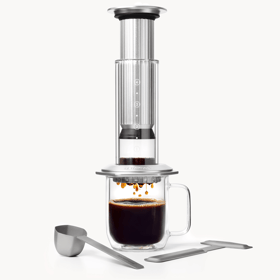
Premium
The glass-chamber AeroPress - a double-wall borosilicate brew chamber and stainless filter cap move the whole water path off the Original's plastic, leaving only a silicone plunger seal.
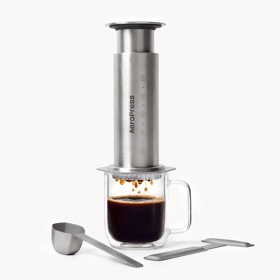
Steel
An all-304-stainless, double-wall vacuum-insulated AeroPress - the whole brew path is steel, with only a silicone plunger seal. The near-indestructible, travel-ready plastic-free option.
| Product | Rating | Touches your food | Price | Made in |
|---|---|---|---|---|
 AeroPress Premium Best Overall (Glass & Metal) AeroPress Premium Best Overall (Glass & Metal) | Silicone ·Borosilicate Glass ·Anodized Aluminum ·Stainless Steel | $$$$ | USA | |
 AeroPress Steel Best for Travel (All-Metal) AeroPress Steel Best for Travel (All-Metal) | Silicone ·Stainless Steel | $$$$ | USA |
AeroPress to avoid
AeroPress Original
The brew chamber and filter cap are polypropylene and hold hot water for the full brew; buy the glass Premium or stainless Steel for a plastic-free water path.
Plastic-Free Moka Pots & Stovetop Espresso
Stovetop brewers that force pressurized hot water up through grounds for a strong, espresso-like coffee.
What to look for in moka pots & stovetop espresso
- Stainless steel brew chambers instead of aluminum for the actual coffee contact
- The gasket is silicone or rubber - a small, replaceable, non-plastic (or silicone) part
- Handles and knobs are usually plastic but never touch the coffee
| Product | Rating | Touches your food | Price | Made in |
|---|---|---|---|---|
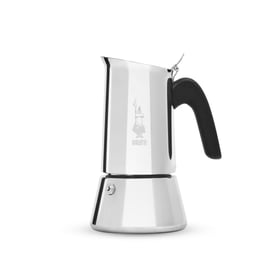
 Bialetti Venus Stainless Steel Moka Pot Best Overall Bialetti Venus Stainless Steel Moka Pot Best Overall | Silicone ·Stainless Steel | $$ | Italy |
Moka pots & stovetop espresso to avoid
Bialetti Moka Express (classic aluminum)
The iconic octagonal pot brews by forcing near-boiling water through an aluminum chamber and funnel. Not a plastic problem, but an aluminum-contact one - the stainless Venus gives the same result without it.
Plastic-Free Percolators
Stovetop and electric percolators that cycle boiling water up through a central stem and over the grounds.
The short answer
Both picks here keep coffee on bare steel, so this comes down to the handle. The Coletti Bozeman is fully plastic-free - all stainless with a wood handle and a glass lid knob - and is the flagship the plastic-free community points to. The Farberware Yosemite is the value option with an identical all-steel brew path (pot, stem, basket, spreader); its handle and knob-retaining ring are plastic, but they never touch coffee. Whichever you take, percolator brewing over-extracts if you leave it going, so it rewards attention in a way a drip machine doesn't.
What to look for in percolators
- All-stainless brew path (pot, stem, basket, spreader) is common and cheap
- Exterior handle and lid knob are usually plastic but do not touch coffee
- Electric percolators reintroduce plastic parts - the stovetop kind is cleaner
- No consumable filters needed
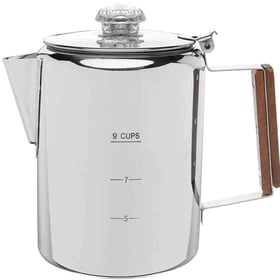
Bozeman Percolator
An all-stainless stovetop percolator with a wood handle and glass lid knob - no plastic anywhere, brew path or otherwise. The plastic-free community's flagship percolator.
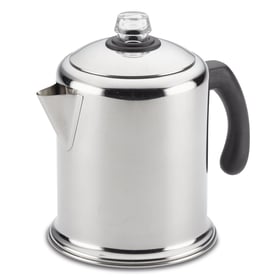
Classic Yosemite Stovetop Percolator
Inexpensive all-stainless stovetop percolator - the entire brew path (pot, stem, basket, spreader) is steel; the only plastic is the exterior handle, which never touches coffee.
| Product | Rating | Touches your food | Price | Made in |
|---|---|---|---|---|
 Coletti Bozeman Percolator Best Overall Coletti Bozeman Percolator Best Overall | Stainless Steel | $$ | China | |
| Stainless Steel | $$ | — |

Plastic-Free Paper Coffee Filters
The disposable filter every drip, pour-over, and AeroPress brew runs through - bleached or unbleached, straight paper or paper-and-abaca blends.
The short answer
Paper filters sound plastic-free by default, but they're a documented PFAS route, so verification is the whole point. If You Care is the pick because it's the rare brand that has actually been tested - unbleached, totally chlorine-free, and non-detect for PFAS in independent lab work - with the caveat that the paper is thin and the seam can tear if you're rough with it. CAFEC's abaca blend is the better brewing paper, strong with a fast even flow that specialty pour-over people prefer, but no independent PFAS testing exists for it, so it is unconfirmed rather than clean. Unbleached paper imparts more flavour; rinse the filter first.
What to look for in paper coffee filters
- The real bleaching risk is generic supermarket filters chlorine-bleached the old way, which can leave trace dioxins; reputable brands (Hario, CAFEC, If You Care) use oxygen/peroxide (TCF) bleaching or skip bleaching entirely, and the box should say so
- Unbleached (natural brown) skips bleaching altogether, at the cost of more "papery" taste until you rinse the filter first
- Look for filters described as PFAS-free / no fluorochemical treatment - an independent lab test found a PFAS indicator in one popular unbleached brand while others tested clean, so this isn't hypothetical
- Abaca (manila hemp) fiber blends are prized for a tighter weave, faster drawdown, and less paper taste, not for being more or less plastic-free
- Check the seam - most cone filters are glued, not heat-sealed with plastic; either way it's a tiny amount at the very edge
- If your brewer accepts a reusable stainless mesh filter, that's the fully plastic-free (and zero-waste) alternative to paper
Unbleached Coffee Filters
Unbleached, totally-chlorine-free paper filters that also tested non-detect for PFAS in independent lab testing - the rare "paper filter" claim that's actually been verified.
Abaca Coffee Filters
A premium abaca (Manila hemp) and wood-pulp blend filter paper favored by specialty pour-over brewers for its strength and fast, even flow - plastic-free by construction, oxygen-bleached rather than chlorine.
| Product | Rating | Touches your food | Price | Made in |
|---|---|---|---|---|
| If You Care Unbleached Coffee Filters Best Plastic-Free Pick | Paper | $ | — | |
| Paper | $ | — |
Paper coffee filters to avoid
Chemex Bonded Natural (Unbleached) Filters
Not a plastic call - this is 100% paper, genuinely plastic-free. But an independent EPA-certified lab test found a PFAS indicator (organic fluorine) in this specific unbleached line, while comparable filters from other brands tested non-detect, so we don't recommend it until that's resolved.
Related:Kettles· Drip Coffee Machines· Espresso & Pod Machines