Best Plastic-Free Dish Brushes & Bottle Brushes
Last reviewed September 2026
A brush keeps your hand out of the water and outlasts a sponge - but most "wooden" dish brushes still have nylon bristles. The handle is the easy part; the bristles are the whole plastic question, and the best natural brushes use a replaceable head so the handle lasts for years.
The short answer
This whole category is plastic-free, so pick on how you want to replace the worn head. The Redecker is the benchmark - untreated beechwood, stiff tampico agave bristles, and a stainless clamp so the handle lasts years - and Zefiro's twist-off system is the easiest refill, with compostable sisal or palm heads. For vegan bristles, No Tox Life's agave brush is the pick, though its bamboo handle carries a water-based varnish rather than being bare wood; the same brand's palmyra pot brush is the one for cast iron and baked-on sheet pans. For bottles and jars, EcoCoconut's coir brush on a steel spine reaches the bottom. Natural bristles wear faster than nylon - that's the trade.
Why plastic matters in dish brushes & bottle brushes
A dish brush looks like an easy plastic-free win: swap the all-plastic brush for a handsome wooden one and you're done. Except the part that does the work - and the part that wears down and sheds - is the bristles, and on most wooden brushes those bristles are still nylon. Nylon is plastic; as it scrubs against pans and abrades over months of hot water, it sheds microplastic just like a foam sponge, and it's usually anchored with a metal staple so you can't compost the head anyway.
The genuinely plastic-free brushes use plant or animal bristle - sisal and tampico (both agave), palm fiber, coconut coir, or horsehair - set into a wood or bamboo handle. These scrub well, stiffen usefully when wet, and compost at the end. The one real tradeoff is lifespan: natural bristles soften and wear faster than nylon, which is exactly why a replaceable-head design is worth seeking out - you keep the handle and swap only the worn head.
What to look for in dish brushes & bottle brushes
- The bristle material is everything - look for sisal, tampico/agave, palm, coconut coir, or horsehair, not nylon
- "Bamboo" or "wooden" describes the handle, not the bristles - a wood-handled brush can still be all-nylon on the business end
- A replaceable head means the handle lasts for years and only the worn bristle head is composted
- Check how the bristles are anchored - a metal staple or wire means the head can't be fully composted (still better than plastic, but note it)
- For bottle brushes, watch the spine - many use a twisted metal wire (recyclable) or, worse, a plastic core
- Natural bristles are softer and shorter-lived than nylon - that's the compostability tradeoff, not a defect
Recommended dish brushes & bottle brushes
Every product here we'd actually suggest — best-in-class picks first, then the rest by how plastic-free they are.
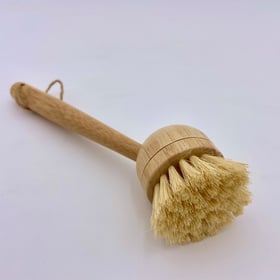
Bamboo Dish Brush with Replaceable Head
A bamboo-handled brush whose head twists off with no tools - compost the worn sisal or palm-fiber head, twist on a refill, keep the handle. Real plant bristles, not the nylon most bamboo brushes hide.
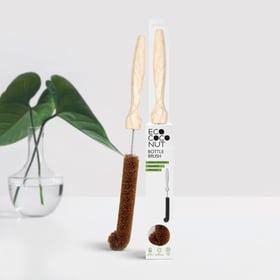
Bottle Brush
Coconut-coir bristles on a stainless wire spine and a reclaimed-wood handle - a plastic-free way to reach the bottom of water bottles, jars, and narrow vessels.
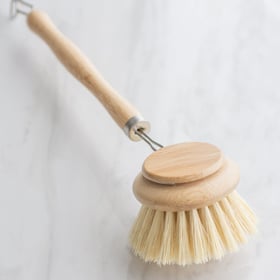
Casa Agave Long Handle Dish Brush
A bamboo-handled brush with stiff agave/palmyra bristles and a replaceable head - a vegan, plant-fiber alternative to nylon, at around ten dollars.
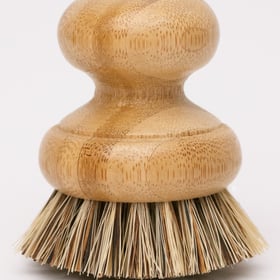
Casa Agave Pot Brush
A short, stiff palmyra-fiber scrub brush for cast iron, sheet pans, and baked-on food - the plant-fiber answer to a hard nylon pot brush.
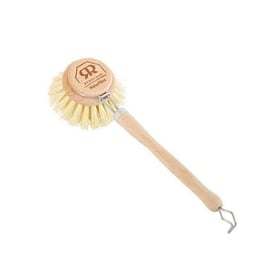
Original Dish Brush
The benchmark natural dish brush - untreated beechwood, stiff tampico agave bristles, and a stainless clamp so you swap the worn head and keep the handle for years. No plastic anywhere.
| Product | Rating | Touches the surface | Price | Made in |
|---|---|---|---|---|
 Zefiro Bamboo Dish Brush with Replaceable Head Best Replaceable-Head System Zefiro Bamboo Dish Brush with Replaceable Head Best Replaceable-Head System | Sisal | $ | — | |
 EcoCoconut Bottle Brush Best Bottle Brush EcoCoconut Bottle Brush Best Bottle Brush | Coconut Coir | $ | — | |
 No Tox Life Casa Agave Long Handle Dish Brush Best Vegan Pick No Tox Life Casa Agave Long Handle Dish Brush Best Vegan Pick | Sisal | $ | — | |
 No Tox Life Casa Agave Pot Brush Best for Pots & Pans No Tox Life Casa Agave Pot Brush Best for Pots & Pans | Palm Fiber | $ | — | |
 Redecker Original Dish Brush Best Overall Redecker Original Dish Brush Best Overall | Tampico Fiber | $ | — |
Dish brushes & bottle brushes to avoid
Popular options that look plastic-free but aren't — and whole categories worth skipping.
Full Circle Be Good Bamboo Dish Brush
The bamboo handle looks plastic-free, but the bristles are recycled plastic - the exact bait-and-switch this category warns about. For a bamboo brush with real plant bristles, see the Zefiro or No Tox Life Casa Agave.
Scrub Daddy Dish Daddy Dishwand
A plastic wand with plastic scrubber heads and a soap reservoir - fully synthetic, nothing natural. For a refillable-head brush that's actually plastic-free, see the Zefiro or No Tox Life Casa Agave.
OXO Good Grips Dish Brush
A polypropylene handle and nylon bristles - the entire cleaning surface is plastic that sheds as it scrubs. For a natural-bristle brush, see the Redecker Original (tampico) or the No Tox Life Casa Agave.
Wood-handled brushes with nylon bristles
The most common bait-and-switch in this category: a natural-looking bamboo or wooden handle with bristles that are still nylon (often "recycled" nylon, still plastic). The handle composts; the bristle head does not, and it sheds microplastic as it scrubs. Always confirm the bristle fiber, not just the handle.
Common questions about dish brushes & bottle brushes
Is there a fully plastic-free option for dish brushes & bottle brushes?
Yes. Of the 5 dish brushes & bottle brushes we recommend, 5 rate as fully plastic-free, with no plastic and no silicone anywhere in the product: Zefiro Bamboo Dish Brush with Replaceable Head, EcoCoconut Bottle Brush, No Tox Life Casa Agave Long Handle Dish Brush, No Tox Life Casa Agave Pot Brush and Redecker Original Dish Brush.
Which dish brushes & bottle brushes do you recommend most?
Of the 5 dish brushes & bottle brushes we recommend, Zefiro Bamboo Dish Brush with Replaceable Head takes Best Replaceable-Head System, EcoCoconut Bottle Brush takes Best Bottle Brush and No Tox Life Casa Agave Long Handle Dish Brush takes Best Vegan Pick.
Which dish brushes & bottle brushes should you avoid?
Among the dish brushes & bottle brushes we have reviewed, we do not recommend Full Circle Be Good Bamboo Dish Brush, Scrub Daddy Dish Daddy Dishwand and OXO Good Grips Dish Brush. We also suggest skipping Wood-handled brushes with nylon bristles.
Related:Dish Sponges & Scrubbers· Water Bottles