Best Plastic-Free Dish Sponges & Scrubbers
Last reviewed September 2026
The sponge is the single most-touched, most-disposable plastic object in most kitchens - and one of the easiest to replace. Natural cellulose, loofah, coconut coir, and metal scours cover every job a foam sponge does, compost or recycle at the end, and cost about the same.
The short answer
No single sponge does both jobs, so most kitchens want two. Blueland's two-sided sponge is the best all-rounder - cellulose to wipe, luffa to scrub, cotton thread, no foam or glue, home-compostable - with Full Circle's loofah combo doing the same for a few dollars a pair. Neither will touch genuinely baked-on food, and the honest answer there is metal: Full Circle's solid copper mesh handles what no plant fiber can, though it will scratch nonstick and enamel, so keep it for bare metal. For wiping counters and soaking up spills, a Skoy cloth replaces roughly fifteen rolls of paper towels and composts in about five weeks.
Why plastic matters in dish sponges & scrubbers
A standard kitchen sponge is polyurethane foam - petroleum plastic - and it cleans by abrading, which means it wears itself away against your dishes. That shed material is microplastic: fragments and fibers that go down the drain and onto the plates and pans you eat off. The scrubby side is usually polyester or nylon mesh, more of the same. Melamine-foam "erasers" are the most extreme case - they clean by visibly disintegrating into plastic particles. Because a sponge is warm, wet, and in daily food-surface contact, and because you throw it out every few weeks, it's a small object with an outsized plastic footprint.
The plastic-free versions are genuinely good, not compromises. A cellulose sponge is more absorbent than foam; loofah and coconut coir out-scrub a green pad on stuck-on food; a copper or stainless scour handles cast iron and sheet pans. The main things to verify are that "cellulose" isn't secretly a polyurethane blend, and that a "natural" sponge doesn't have a synthetic scrub layer glued to one side.
What to look for in dish sponges & scrubbers
- 100% cellulose or cotton-and-cellulose for the soft sponge - not a cellulose-polyurethane blend
- Loofah (dried gourd) or coconut coir for the scrubbing side, instead of polyester/nylon mesh
- For metal, solid copper or stainless steel - not a plastic pad with a thin copper-colored coating
- Confirm compostability - home-compostable is best; some cellulose blends are industrial-only
- No glued-on plastic scrub pad, plastic backing, or plastic mesh binding the fibers
- Swedish dishcloths (cellulose + cotton) are a reusable, compostable swap for both sponges and paper towels
Recommended dish sponges & scrubbers
Every product here we'd actually suggest — best-in-class picks first, then the rest by how plastic-free they are.
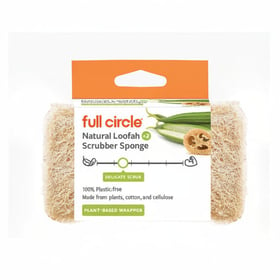
Loofah Scrubber Sponge
An all-plant combo sponge - loofah scrub side, cellulose wipe side, cotton stitching - at a few dollars a pair. Gritty when dry, softer when wet, and compostable.
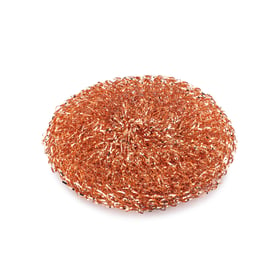
Lucky Scrubber Copper Scourer
A scrubber of solid copper mesh for the baked-on jobs no plant fiber can handle. Naturally antimicrobial, sheds no microplastics, and recyclable as scrap metal when it finally frays.
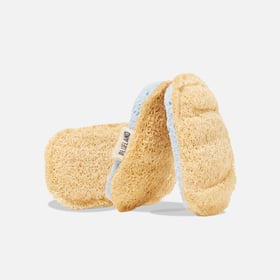
Scrub Sponge
A two-sided sponge that's plant cellulose on the wipe side and natural luffa on the scrub side, hand-sewn with cotton thread - no foam, no glue, fully home-compostable.
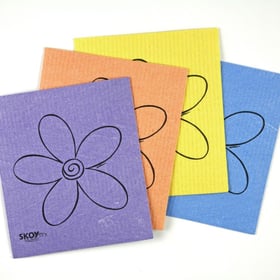
Cloth
A Swedish-style dishcloth of cellulose and cotton that absorbs like paper towels but is reusable hundreds of times and composts in about five weeks. One replaces roughly 15 rolls of paper towels.
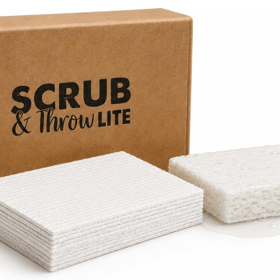
Natural Cellulose Scrub Sponge
The soft, absorbent half of the pair - plain wood-pulp cellulose with no foam and no glued-on scrub pad, flat-packed fifteen to a cardboard box.
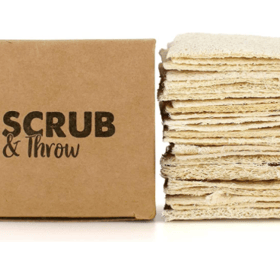
Natural Loofah Scrub Sponge
A bare dried loofah pad, sold thirty to a cardboard box at about 67 cents each - and the only sponge here whose plant content has been verified by an independent lab rather than the brand.
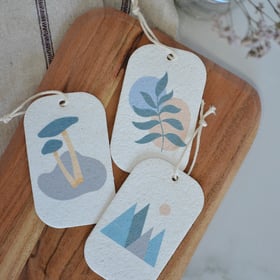
Pop-Up Sponge
A plain cellulose-and-cotton wipe sponge that ships as a flat sheet and expands in water. Highly absorbent, compostable, and cheap - the simple foam-sponge replacement for wiping and washing.
| Product | Rating | Touches the surface | Price | Made in |
|---|---|---|---|---|
 Full Circle Loofah Scrubber Sponge Best Budget Full Circle Loofah Scrubber Sponge Best Budget | Luffa ·Cellulose | $ | — | |
 Full Circle Lucky Scrubber Copper Scourer Best for Stuck-On Food Full Circle Lucky Scrubber Copper Scourer Best for Stuck-On Food | Copper | $ | — | |
 Blueland Scrub Sponge Best Overall Blueland Scrub Sponge Best Overall | Cellulose ·Luffa | $ | — | |
 Skoy Cloth Best Paper-Towel Replacement Skoy Cloth Best Paper-Towel Replacement | Cellulose | $ | — | |
| Cellulose | $ | — | ||
| Luffa | $ | — | ||
| Cellulose | $ | — |


Dish sponges & scrubbers to avoid
Popular options that look plastic-free but aren't — and whole categories worth skipping.
Scotch-Brite Scrub Sponge (Yellow & Green)
The soft yellow side is cellulose, but the green scour pad is plastic fiber that sheds as it scrubs. For a two-sided sponge without the synthetic pad, the Blueland or Full Circle cellulose-and-loofah sponges do the same job plastic-free.
Mr. Clean Magic Eraser
It cleans by disintegrating into microplastic particles - that's the mechanism, not a side effect. For scuffs, a pumice stone or a natural-fiber scrubber; for dishes, the Blueland Scrub Sponge or a copper scourer.
Scrub Daddy Original
The whole scrubber is engineered polyurethane foam - a plastic that abrades against your dishes as it cleans. For the same jobs plastic-free, see the Blueland Scrub Sponge (cellulose + luffa) or a copper scourer for baked-on food.
Generic polyurethane foam sponges (the yellow-and-green kind)
The default supermarket sponge - a polyurethane foam body with a polyester or nylon scour pad, often mislabeled "cellulose." It abrades and sheds microplastics in use, composts nowhere, and grows bacteria in its damp core. This is the whole class the natural sponges here replace.
Copper- or steel-"coated" plastic scrubbers
Sold as metal scrubbers but built from a plastic mesh or foam with a thin metallic-look coating or a few metal strands. If it's cheap and springy, it's plastic underneath. A solid copper or stainless scrubber is a single material all the way through.
Common questions about dish sponges & scrubbers
Is there a fully plastic-free option for dish sponges & scrubbers?
Yes. Of the 7 dish sponges & scrubbers we recommend, 7 rate as fully plastic-free, with no plastic and no silicone anywhere in the product: Full Circle Loofah Scrubber Sponge, Full Circle Lucky Scrubber Copper Scourer, Blueland Scrub Sponge, Skoy Cloth, Scrub & Throw Natural Cellulose Scrub Sponge, Scrub & Throw Natural Loofah Scrub Sponge and Me Mother Earth Pop-Up Sponge.
Which dish sponges & scrubbers do you recommend most?
Of the 7 dish sponges & scrubbers we recommend, Full Circle Loofah Scrubber Sponge takes Best Budget, Full Circle Lucky Scrubber Copper Scourer takes Best for Stuck-On Food and Blueland Scrub Sponge takes Best Overall.
Which dish sponges & scrubbers should you avoid?
Among the dish sponges & scrubbers we have reviewed, we do not recommend Scotch-Brite Scrub Sponge (Yellow & Green), Mr. Clean Magic Eraser and Scrub Daddy Original. We also suggest skipping Generic polyurethane foam sponges (the yellow-and-green kind) and Copper- or steel-"coated" plastic scrubbers.
Related:Dish Brushes & Bottle Brushes· Cookware· Food Storage Containers