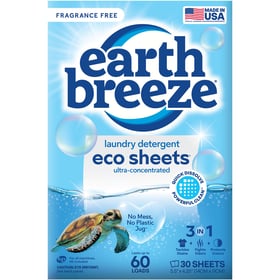
Laundry detergent sheets are one of the great marketing successes of the plastic-free movement. No heavy jug, a slim paper mailer, an “eco” or “plastic-free” label — they look like the obvious upgrade. There’s just one catch, and it’s in the sheet itself: it’s held together with a plastic.
What the sheet is actually made of
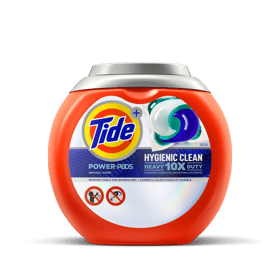
The thing that makes a detergent sheet a sheet — and lets it dissolve in the wash — is polyvinyl alcohol (PVA, also written PVOH), a synthetic, water-soluble polymer. It’s a plastic. It appears on the brands’ own ingredient lists (Earth Breeze and Tru Earth both list it), and it’s the exact same material as the film on a conventional laundry pod — Tide’s own website says its pac uses a water-soluble film “made possible by polyvinyl alcohol.”
So the “plastic-free” laundry sheet and the plastic pod it’s positioned against are, materially, the same trick: detergent wrapped in or bound by dissolvable plastic film. The plastic didn’t leave; it moved from a jug you can see to a film that vanishes into your wash water.
“Dissolves” is not the same as “disappears”
The defense you’ll hear is that PVA dissolves, and dissolving is fine. But a water-soluble plastic dissolving is just what it does — the polymer is now dispersed in the wastewater, and the real question is what happens to it next. That’s where it gets genuinely unsettled.
- The concern side: a 2021 modeling study (Rolsky & Kelkar) estimated that roughly 77% of PVA passes through US wastewater treatment intact, ending up in effluent or in the biosolids spread on farmland. Important caveat, which the authors state themselves: it’s a first-order model, not a field measurement, and it assumes treatment plants whose microbes aren’t acclimated to digesting PVA.
- The counter side: the industry body (the American Cleaning Institute), an independent 2023 expert panel (SciPinion), and manufacturers argue that laundry-grade PVA is readily biodegradable when the conditions are right — acclimated microbes, enough residence time, the right temperature — and that the 2021 model overstates what survives.
The honest reading: PVA is unambiguously a plastic, but whether the dissolved plastic is an environmental problem is genuinely unresolved. It degrades well under ideal conditions; septic systems, older plants, and land-spread biosolids are where the doubt lives. It’s also not toxic or bioaccumulative the way PFAS is — this is an environmental-fate question, not a poison one.
The move that skips the argument
Here’s the useful part: you don’t have to resolve the science to make a clean choice. The debate only exists because the product contains PVA. Pick a format that has none, and it’s moot:
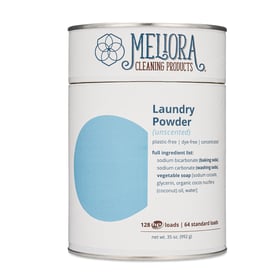
- Powder — a loose mineral or enzyme powder, ideally in a paper or steel canister rather than a plastic bag.
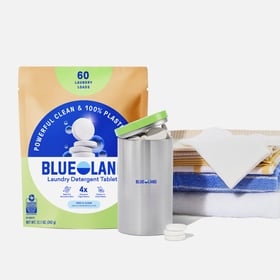
- A genuinely PVA-free tablet — note this is a compressed solid that dissolves directly, not a pod with a film around it. Some brands (Blueland is one) state outright that they reject PVA.
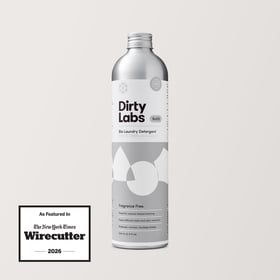
- A liquid concentrate — no film at all, and the good ones ship in aluminum or glass instead of a plastic jug.
All three clean your clothes as well as a sheet or pod. None put dissolvable plastic in your wash. That’s the whole point of a materials-first view: when the evidence is uncertain, the cheapest form of certainty is choosing the option that removes the question entirely.
The bottom line
A laundry sheet isn’t a scam — it’s a real detergent, and a light paper mailer genuinely beats shipping water in plastic jugs. But “plastic-free” is the wrong label for it, because the sheet is dissolvable plastic film plus detergent, same as the pods. If avoiding plastic is why you switched, a powder, a PVA-free tablet, or a concentrate is the switch that actually delivers it.