Every time you wash synthetic clothes — polyester, nylon, acrylic, elastane — they shed tiny plastic fibers. A single synthetic load can release on the order of hundreds of thousands of them, and they’re small enough to slip through wastewater treatment and into rivers and oceans. Capture devices exist to catch those fibers before they leave your machine. They work. They’re also, every one of them, made of plastic. Here’s how to hold both of those facts at once.
The devices, and how much they actually catch
There are three formats, and the honest ranking is steady even though the exact numbers aren’t: external filters beat mesh bags beat drum balls.
- External inline filters (like the Filtrol or PlanetCare) plumb onto your machine’s drain hose and filter the whole load. In independent testing they’re the most effective class — roughly 78–90%+ capture. Manufacturers sometimes advertise 98%; treat that as a best-case, synthetic-only number.
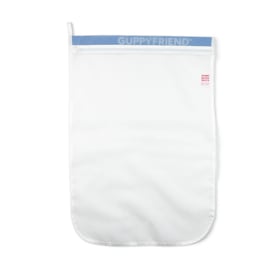
- Mesh wash bags (the Guppyfriend) hold your synthetic garments; fibers shed inside stay in the bag. Independent testing put the Guppyfriend around 54%, the best of the in-drum options — but it only protects what you put inside it.
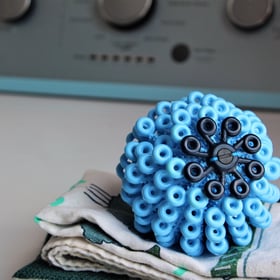
- Drum balls (the Cora Ball) are the easiest and cheapest: toss one in and pull the collected fuzz off periodically. They’re also the weakest, around 26–31%, and in one study didn’t significantly reduce fiber by weight.
A big caveat: the same device can score very differently in different labs, because test methods vary enormously — garment type, whether fibers are counted by number or weighed, water temperature, one wash or many. A 2023 review looked across the studies and concluded, essentially, that the methods diverge too much for a clean ranking and that standardized interlaboratory trials are needed. So read the percentages as ranges, and trust the order more than the digits.
The obvious irony
Every one of these tools is plastic. The Guppyfriend is nylon mesh; the Cora Ball is recycled plastic; the filters are plastic housings with plastic or synthetic-media cartridges. Buying plastic to fight plastic feels backwards.
But the math is genuinely favorable. A durable filter or bag captures far more microplastic over its lifetime than it contains — a few hundred grams of plastic hardware against years of a synthetic wardrobe’s shedding. Several are recyclable or run closed loops (PlanetCare refurbishes returned cartridges; Cora Ball has a take-back program). None of this makes a device “plastic-free,” and we don’t rate them as if it did — they’re mitigation for synthetic textiles you already own, not a virtue in themselves. That’s the right frame: a net-positive tool, not a green badge.
The levers that matter more than any gadget
A capture device is a second line of defense. The bigger reductions come from upstream:
- Own fewer synthetics. Natural fibers shed too, but what they shed isn’t plastic. This is the same logic behind starting a plastic-free wardrobe with the clothes that touch you most.
- Wash less, cold, and full. Fewer cycles, lower temperatures, and full loads all reduce shedding per garment.
- Air-dry when you can. Tumble drying is itself a significant shedding and emission path.
Do those, and a filter mops up much of what’s left.
Policy is heading this way anyway
France’s AGEC law made it the first country to require new domestic washing machines to include a microfiber-capture solution — a sign of where regulation is going, though enforcement has lagged the headline (the technical definitions took time to finalize, so verify the current status before treating it as in force). Similar bills have been floated in the UK, California, and Oregon. The consistent direction is filtration built into or plumbed onto the machine — the external-filter approach — rather than in-drum add-ons.
What we’d do
If you own a lot of synthetic clothing and want the most impact, an external drain-hose filter captures the most and works on every load. If you want something simple and cheap that helps today, a Guppyfriend bag for your synthetics is the best low-effort option, and a Cora Ball is better than nothing. But the highest-leverage move isn’t on this list at all: buy fewer synthetic clothes, wash them gently, and let them air-dry. The filter is there to catch what that doesn’t.