Washing-Machine Microfiber Filters
Last reviewed September 2026
A different kind of category, and worth saying up front: every device here is itself plastic. They exist to catch the plastic microfibers your synthetic clothes shed in the wash - hundreds of thousands per load - before they reach waterways. So the honest measure isn't "is it plastic-free" (none are), it's whether it captures far more plastic than it's made of. The good ones clearly do. We dig into the efficacy studies and the tradeoffs in a companion deep-dive article; this is the short version with the devices themselves.
The short answer
Everything on this page is made of plastic, and that is the point: these are mitigation tools for the synthetic clothes you already own, not plastic-free products. External drain-hose filters are the most effective class by a wide margin - the Filtrol 160 uses a reusable washable screen with no cartridge subscription, while PlanetCare runs replaceable cartridges you mail back to be refurbished. Both need a DIY install on the drain hose and periodic cleaning. In-drum options are far weaker: the Guppyfriend bag only catches fibers from clothes placed inside it, and the Cora Ball is the easiest and least effective at roughly 26-31% capture.
Why plastic matters in microfiber filters
Synthetic clothes shed plastic microfibers every wash - a single synthetic load can release on the order of hundreds of thousands of fibers into wastewater. Capture devices intercept them, and independent testing shows the class works, in a clear order: external inline filters plumbed onto the drain hose catch the most (roughly 78-90%+ in peer-reviewed tests), a mesh wash bag is the best in-drum option (around 54%), and a drum ball is the cheapest and weakest (about 26-31%). The numbers vary a lot between labs because test methods differ, so they're best read as ranges, not precise scores.
The irony is real: these tools are made of plastic to fight plastic. But a durable filter or bag keeps far more microplastic out of the water over its life than it contains, which is why the math still favors using one if you own synthetic clothes. What it isn't is a substitute for the bigger levers - owning fewer synthetics, washing less, in cold, on full loads, and air-drying.
What to look for in microfiber filters
- Match the tool to your setup - an external drain-hose filter catches the most (whole load); a mesh bag protects only what's inside it; a drum ball is easiest but weakest
- Treat lone "98%" marketing numbers with caution - independent studies report ranges, and methods vary widely; the ranking (filters > bag > ball) is steadier than the exact percentages
- Captured fiber needs real disposal - into the trash, not rinsed down another drain
- None of these make anything plastic-free; they're mitigation for synthetic textiles you already own. The bigger win is fewer synthetics, cold/full/less-frequent washes, and air-drying
Recommended microfiber filters
Every product here we'd actually suggest — best-in-class picks first, then the rest by how plastic-free they are.
2.0 Filter
An external drain-hose filter with replaceable cartridges you mail back to be refurbished - a closed-loop take on the most effective class of capture device. Plastic hardware, whole-load capture.
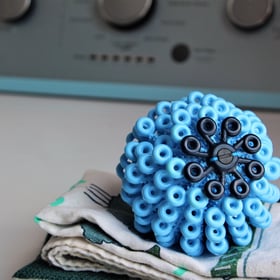
Cora Ball
A spiky ball you toss in the drum to catch microfibers - the easiest and cheapest option, and the weakest. Made of recycled plastic; a low-effort first step, not the most effective one.
160
An external drain-hose filter with a reusable, washable mesh screen - the most effective class of capture device, with no cartridge subscription. Plastic hardware, whole-load capture.
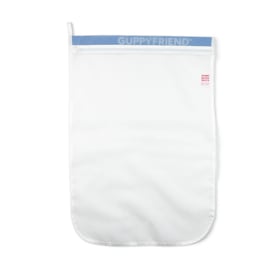
Washing Bag
A mesh bag you put synthetic clothes in - it catches the microfibers they shed and may reduce shedding in the first place. It's nylon mesh, so plastic itself, but the best in-drum capture option.
| Product | Rating | Touches your water | Price | Made in |
|---|---|---|---|---|
| — | $$$ | — | ||
| — | $ | — | ||
| — | $$$ | — | ||
| — | $$ | — |


Common questions about microfiber filters
Is there a fully plastic-free option for microfiber filters?
No. None of the 4 microfiber filters we recommend is fully plastic-free. The closest is the PlanetCare 2.0 Filter, which we rate as significant plastic contact: plastic is unavoidable in the contact path — the vessel itself, a plastic-based nonstick coating like PTFE, or something every single use has to pass through. This rates the contact path, not the whole object: a steel-bodied machine whose water only ever touches plastic belongs here.
Related reading
How much microplastic do your clothes shed in the wash — and what actually reduces it?
Synthetic clothes shed plastic microfibers every wash, but the biggest levers aren't gadgets — they're which fabrics…
Do washing-machine microfiber filters actually work? (And is it weird that they're plastic?)
Synthetic clothes shed plastic microfibers every wash. Capture devices help — filters more than bags, bags more than…
Related:Laundry Detergent· Undergarments