Best Plastic-Free Teethers & Pacifiers
Last reviewed July 2026
Pacifiers and teething toys - the things babies have in their mouths the most.
The short answer
This category has a genuinely plastic-free mainstream, and the choice is mostly latex versus not. Natursutten is the benchmark pacifier - one piece of natural rubber, nipple, shield and button moulded together, no plastic and no silicone - with HEVEA's star-and-moon doing the same thing. For teethers, HEVEA's panda is solid rubber, and Oil & Carol's is moulded with no hole at all, which rules out the water-gets-inside-and-moulds failure that sinks hollow rubber toys. All of it is latex, so if there's an allergy the answer is Alexa Organics' raw maple rings: no oil, wax, paint, rubber or silicone, just keep them dry and never soak them.
Why plastic matters in teethers & pacifiers
Nothing spends more time in a baby's mouth than a pacifier or teether, often for hours a day, chewed hard, during the period when they're most vulnerable to chemical exposure. Most mainstream pacifiers are plastic shields with silicone nipples, and many teethers are plastic or water-filled plastic. This is the clearest place the natural-rubber-versus-silicone choice matters, so it's a core plastic-free question for parents.
What to look for in teethers & pacifiers
- One-piece natural rubber pacifiers (Natursutten, Hevea) are the fully plastic-free and silicone-free option
- Silicone-nipple pacifiers are common and accepted by many, but the shield is usually plastic
- Teethers - natural rubber or untreated wood are plastic-free; avoid water/gel-filled plastic teethers
- Latex allergy is the one caveat with natural rubber
Recommended teethers & pacifiers
Every product here we'd actually suggest — best-in-class picks first, then the rest by how plastic-free they are.
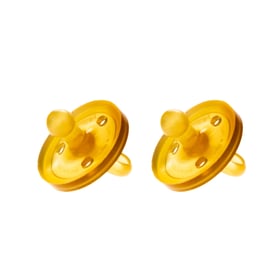
Natural Rubber Pacifier
A single piece of natural rubber - nipple, shield, and button all one molded part, with zero plastic and zero silicone. The benchmark plastic-free pacifier.
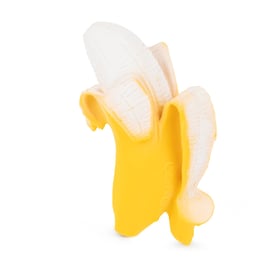
Natural Rubber Teether
A one-piece 100% natural rubber teether molded with no hole - so no water or saliva can get sucked inside to mold, the exact failure mode that sinks hollow rubber toys.
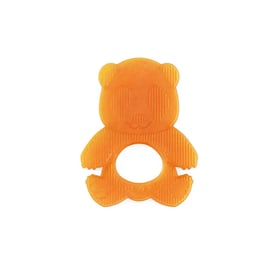
Panda Natural Rubber Teether
A one-piece 100% natural rubber teether shaped like a panda - textured for sore gums, with no plastic, no silicone, and nothing water/gel-filled to puncture.
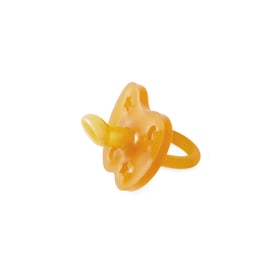
Star & Moon Natural Rubber Pacifier
One-piece 100% natural rubber pacifier with star- and moon-shaped vent holes - nipple and shield are one continuous rubber part, no plastic and no silicone.
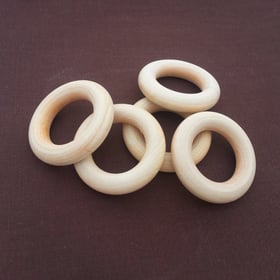
Untreated Maple Teething Rings
Raw, unfinished maple wood rings with no oil, wax, paint, or coating - a genuinely plastic-free (and silicone-free, rubber-free) teether for babies who chew everything.
Silicone Baby Teether
A one-piece 100% medical-grade silicone teether with a finger-prong design - silicone in the mouth, no hard plastic and no sealed water or gel pocket - the definitive mainstream silicone teether.
| Product | Rating | Touches your food | Price | Made in |
|---|---|---|---|---|
 Natursutten Natural Rubber Pacifier Best Plastic-Free Pacifier Natursutten Natural Rubber Pacifier Best Plastic-Free Pacifier | Natural Rubber / Latex | $ | Italy | |
 Oli & Carol Natural Rubber Teether Best No-Hole Design Oli & Carol Natural Rubber Teether Best No-Hole Design | Natural Rubber / Latex | $ | Spain | |
 HEVEA Panda Natural Rubber Teether Best Natural Rubber Teether HEVEA Panda Natural Rubber Teether Best Natural Rubber Teether | Natural Rubber / Latex | $ | Malaysia | |
 HEVEA Star & Moon Natural Rubber Pacifier Best One-Piece Alternative HEVEA Star & Moon Natural Rubber Pacifier Best One-Piece Alternative | Natural Rubber / Latex | $ | Malaysia | |
 Alexa Organics Untreated Maple Teething Rings Best Wood / Zero-Latex Alexa Organics Untreated Maple Teething Rings Best Wood / Zero-Latex | Wood | $ | — | |
| Silicone | $ | China |

Teethers & pacifiers to avoid
Popular options that look plastic-free but aren't — and whole categories worth skipping.
Itzy Ritzy Sweetie Soother (Natural Rubber)
The nipple is natural rubber but the shield is plastic against the baby's face - a one-piece all-rubber pacifier (Natursutten, HEVEA) removes the plastic entirely.
Philips Avent (Ultra Soft / Ultra Air) pacifiers
The mainstream default, and the clearest illustration of the shield problem: the nipple is food-grade silicone but the shield is hard plastic (polypropylene / plant-based hard plastic). So even the "soft" premium lines pair a silicone nipple with a plastic shield pressed against the baby's face for hours. Fine for many parents, but neither plastic-free nor silicone-free - the one-piece natural rubber picks avoid both.
MAM pacifiers
Same construction as most mainstream pacifiers - a silicone (or on some lines latex) nipple mounted in a hard plastic shield and button. The shield and handle are plastic in constant contact with the face and mouth. Popular and well-designed, but not plastic-free; a one-piece natural rubber pacifier removes the plastic entirely.
BIBS and Frigg pacifiers
Enormously popular round-nipple pacifiers, sold in both natural-rubber and silicone nipple versions - but in every case the shield and handle are plastic. That's the same shield-plus-nipple construction as most mainstream pacifiers. Worth being clear-eyed here: the plastic shield doesn't sit in the mouth, and the mold/plastic-shield objection is a niche plastic-free-purist view, not a mainstream safety consensus - most parents use these happily. We flag them only because a one-piece natural-rubber pacifier is the way to avoid plastic entirely.
Water- / gel-filled plastic teethers
The chillable "fill and freeze" teethers are a sealed plastic (often soft PVC-type) skin around a water or gel core. The whole chewing surface is plastic, and a punctured or worn seam can leak the fill - the opposite of what you want in a baby's mouth for hours. A solid natural rubber or untreated wood teether gives the chew without the plastic or the leak risk.
Sophie la Girafe
Genuinely 100% natural rubber - but it is coated in food-grade paint and, more importantly, has a single valve hole into a hollow body, which lets water and saliva get sucked inside and has produced widely reported interior mold. The material is right; the hollow-with-a-hole design is the failure mode. A solid one-piece rubber teether (HEVEA Panda) avoids the internal-moisture trap.
Common questions about teethers & pacifiers
Is there a fully plastic-free option for teethers & pacifiers?
Yes. Of the 6 teethers & pacifiers we recommend, 5 rate as fully plastic-free, with no plastic and no silicone anywhere in the product: Natursutten Natural Rubber Pacifier, Oli & Carol Natural Rubber Teether, HEVEA Panda Natural Rubber Teether, HEVEA Star & Moon Natural Rubber Pacifier and Alexa Organics Untreated Maple Teething Rings.
Which teethers & pacifiers do you recommend most?
Of the 6 teethers & pacifiers we recommend, Natursutten Natural Rubber Pacifier takes Best Plastic-Free Pacifier, Oli & Carol Natural Rubber Teether takes Best No-Hole Design and HEVEA Panda Natural Rubber Teether takes Best Natural Rubber Teether.
Which teethers & pacifiers should you avoid?
Among the teethers & pacifiers we have reviewed, we do not recommend Itzy Ritzy Sweetie Soother (Natural Rubber). We also suggest skipping Philips Avent (Ultra Soft / Ultra Air) pacifiers, MAM pacifiers, BIBS and Frigg pacifiers, Water- / gel-filled plastic teethers and Sophie la Girafe.
Related reading
Related:Baby Bottles· Kids Plates & Bowls